Top 10 Freight Airports in the US: 2025 Update
2025-11-10
Even in an era of digitized supply chain management, freight airports remain indispensable. Air cargo is the critical link for speed-sensitive supply chains, moving everything from aircraft spares and pharmaceuticals to high-value electronics.
In 2025, several forces underscore the continued importance of U.S. freight airports: the resilience of integrator networks, surging e-commerce logistics, and shifting global routings that reshape gateway patterns.
For shippers, understanding which hubs dominate and why provides an edge in global logistics and freight forwarding strategy. This update highlights the top 10 airports by tonnage, explains what has changed, and outlines the operational takeaways for supply chain leaders.
Methodology and What’s New Since the Last Edition
Rankings are based on the most recent annual tonnage data reported by airports and federal sources. Because many airports release rolling updates, positions may shift slightly year to year. The list differentiates between pure integrator hubs and mixed-use airports that combine freighter and belly cargo.
What’s new in 2025:
- Integrator pull is stronger than ever, with e-commerce driving higher volumes to Louisville, Cincinnati, and Indianapolis.
- Trans-Pacific freighter flows remain resilient, keeping Anchorage and Chicago in prime positions.
- Belly cargo recovery is selective, but widebody capacity at LAX and JFK continues to add flexibility for forwarders and shippers.
The Top 10 Freight Airports
- Louisville Muhammad Ali International (SDF) – UPS’ Worldport anchors Louisville as a top integrator hub. Dense overnight networks make it ideal for time-definite B2B spares and e-commerce logistics.
- Ted Stevens Anchorage International (ANC) – Anchorage is the essential trans-Pacific stop, offering quick turns, tech stops, and fifth-freedom opportunities (carrying air freight from country B to country C that originates in country A). Its unrivaled freighter flexibility ensures stable Asia-U.S. flows.
- Miami International (MIA) – The premier U.S.-Latin America gateway, MIA specializes in perishables, pharma, and high-value goods. A robust forwarder community and cold chain infrastructure make it vital for supply chain management.
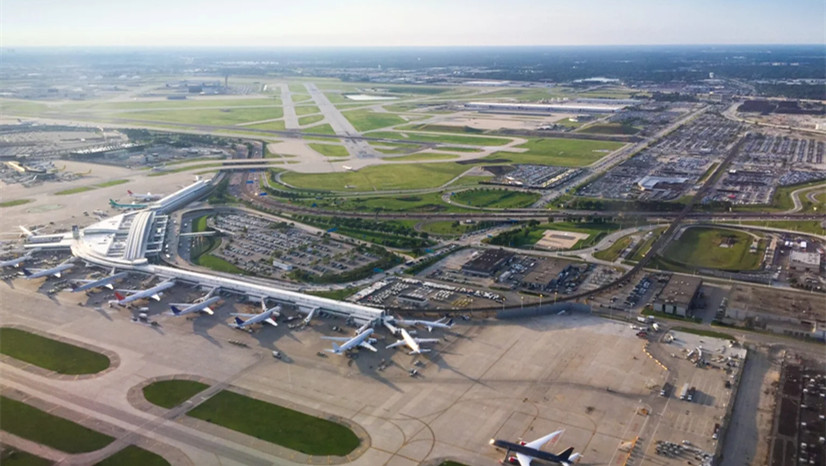
- Chicago O’Hare (ORD) – Balanced belly and freighter lift, a central location, and unmatched forwarder density make ORD indispensable for nationwide reach. Extensive trucking links extend its catchment area.
- Los Angeles International (LAX) – LAX benefits from recovering trans-Pacific belly capacity, with tech and fashion imports at the forefront. Freighters have eased congestion, providing flexible routing options.
- Cincinnati/Northern Kentucky (CVG) – CVG is scaling rapidly with integrator growth. Strong night operations and central U.S. geography support booming e-commerce demand.
- Indianapolis International (IND) – With concentrated integrator presence and modern cargo facilities, IND has become a reliable Midwest powerhouse for time-definite shipments.
- Dallas/Fort Worth International (DFW) – A broad freighter network and central U.S. location give DFW strong pharma, aerospace, and tech cargo flows while minimizing truck dray distances.
- John F. Kennedy International (JFK) – JFK remains a premium belly hub, strong in fashion and pharma exports. Its forwarder ecosystem and global connectivity ensure continued importance.
- Memphis International (MEM) – Still the top airport by tonnage, MEM’s scale is undeniable. However, volumes are heavily integrator driven, shaping national totals rather than offering broader shipper diversification.
What’s Driving the Rankings in 2025
- E-commerce and Integrators: Night sort capacity and time-definite reliability pull share to SDF, CVG, and IND.
- Freighter versus Belly Mix: Trans-Pacific resilience strengthens ANC, ORD, and DFW, while belly capacity boosts LAX and JFK.
- Regional Specialization: MIA dominates perishables; ORD leverages forwarder density; and ANC thrives on trans-Pacific flexibility.
How Shippers Should Use This List
- Match commodity + SLA: Perishables flow best through MIA; fastest order cutoffs route via SDF, CVG, or IND; and Asia-U.S. freighters fit ANC, ORD, or LAX.
- Consider inland trucking offsets: Sometimes a near-top airport plus shorter dray delivers faster and cheaper service than a congested coastal hub.
- Build contingency routings: Secondary gateways help avoid disruption during peak season or irregular operations.
Key Takeaways for Network Planning
- Diversify gateways across integrator, freighter, and belly hubs.
- Align DC placement with airport linehaul timetables to shrink cutoff windows.
- Revisit routings quarterly as schedules, volumes, and market dynamics shift.
Knowing the Air Hubs Helps Boost Strategic Planning
The “best” freight airport depends on your commodity, service level, and downstream distribution plan. In 2025, the leading U.S. gateways combine integrator depth, geographic advantage, and specialized handling.
By treating this ranking as a planning tool and refreshing assumptions regularly, shippers can unlock new efficiencies in freight forwarding, e-commerce logistics, and supply chain management.

Leave A Comment